

Product Description
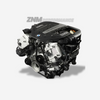
BMW N63 Race Series Engine Build - ZNM Performance
ZNM Performance Race Series Engine Build Program
Introducing our BMW N63 engine program—designed for owners of 4.4L twin-turbo V8s seeking serious reliability and performance beyond factory limitations. This page applies to all variants of the BMW N63 engine, including the N63B44O0 (original E70 X5, F01 750i), N63B44O1 (early F15 X5, F10 550i), N63B44M3 (F02 750i LCI), and N63B44T3 (G30 M550i, G05 X5 50i, G12 750i, etc.).
The BMW N63 is a direct-injection, twin-turbocharged V8 featuring a hot-vee layout—producing impressive output with smooth drivability. However, factory weak points such as premature valve stem seal failure, timing chain stretch, rod bearing wear, and thermal fatigue make it a critical candidate for a properly engineered rebuild when pushing beyond OEM power levels.
Our Race Series N63 engine builds start with full teardown and precision measurement. We address known issues with forged internals, optional sleeving, o-ringed deck machining, and improved bearing geometry to support aggressive tuning, high-load use, and long-term reliability for builds ranging from upgraded daily drivers to full bolt-on drag setups.
Our facility in Pompton Lakes, NJ builds engines for customers across the U.S. and internationally. All engines are fully disassembled, measured, and assembled in-house with final clearances precisely set by our team. Please inquire about international shipping options.
Key Features and Options for Our Built N63 Engines
- O-ringed block deck machining for enhanced head sealing using OEM MLS gaskets
- Block deck can be machined for stainless receiver grooves to combat head lift under boost
- Optional Darton or Italian Rods & Pistons ductile iron sleeves for reinforced cylinder strength
- Forged pistons, upgraded connecting rods with ARP625+ or L19 fasteners, and balanced rotating assemblies
- Built to support 800–1200+ HP with the correct turbo setup, fueling, and calibration
Cylinder Head Upgrades for Your N63
- Complete head teardown, cleaning, pressure testing, and crack inspection
- Supertech dual valve springs and titanium retainers for improved valve control at high RPM
- Upgraded GSC Power Division valve guides—essential for high-temperature turbo applications
- Optional Inconel exhaust valves and stainless intake valves for extreme duty use
- Ideal for high-boost daily builds or fully prepped drag strip applications
Bearing Upgrades for Your N63
- Race-grade ACL and King main/rod bearings with enhanced load distribution
- Optional polymer-coated bearings to reduce startup wear and improve oil film stability
- Clearances custom-set based on build goals: oil viscosity, RPM, and power targets
- Corrects known N63 bearing wear issues tied to heat and factory spec tolerances
- Every journal and shell measured in-house using micrometers and bore gauges
- Supports builds from 600 WHP bolt-ons to full-frame turbo conversions
Frequently Asked Questions (FAQ)
Q: Can the stock N63 handle 800+ HP reliably?
A: The later N63TU versions are stronger than early variants, but even these suffer from heat cycling and oiling issues at high power. Our Race Series builds strengthen every weak point from bearings to deck sealing for dependable performance.
Q: Should I sleeve my N63 engine?
A: We recommend sleeves for any build using oversized pistons, repairing wall damage, or targeting over 950 HP. Our Darton and Italian sleeve options restore wall strength for big boost applications.
Q: What is o-ringed deck machining?
A: We cut stainless steel o-ring grooves into the block deck to improve combustion sealing. This helps prevent head lift and gasket failure when running elevated cylinder pressure on stock MLS gaskets.
Q: Are there camshaft upgrades for the N63?
A: No mainstream aftermarket cams are available, but we do support full valvetrain upgrades with springs, guides, and valve materials to handle extended RPM and boost levels.
Q: What bearings do you use and how are tolerances set?
A: ACL and King race bearings are standard in our builds. All measurements are taken manually, and clearances are matched to your specific goals—not one-size-fits-all charts.


